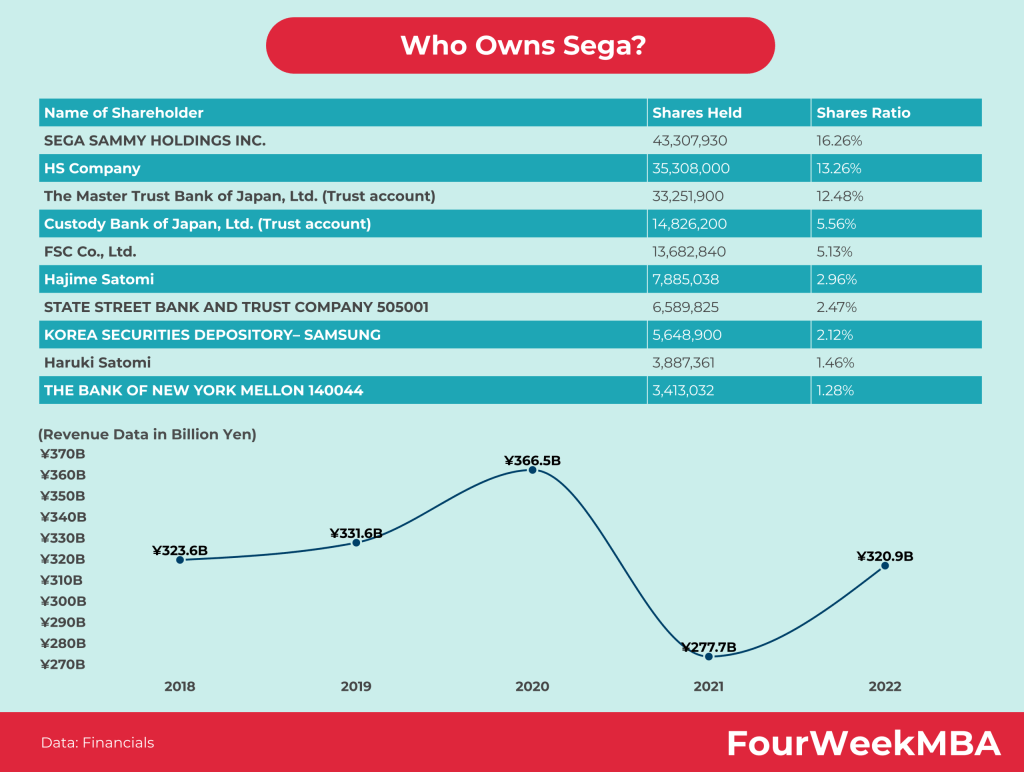
SEGA is a prominent player in the gaming industry with a focus on delivering engaging gaming experiences, iconic characters, and innovative technologies. Their revenue model revolves around game sales, downloadable content, and licensing. Targeting gamers, collectors, and arcade operators, SEGA develops high-quality games, employs effective marketing strategies, and forms strategic partnerships. Their cost structure includes game development, marketing expenses, licensing fees, and operational costs. SEGA aims to provide immersive gaming experiences and maintain its position as a leading player in the industry.
| Element | Description |
|---|---|
| Value Proposition | Sega offers a range of value propositions for its customers: – Gaming Entertainment: The brand provides gaming entertainment experiences, offering a wide variety of video games and consoles. – Iconic Franchises: Sega is known for its iconic game franchises such as Sonic the Hedgehog, which fosters nostalgia and brand loyalty. – Innovation: The company is dedicated to innovation in gaming technology and experiences. – Diverse Game Library: Sega offers diverse gaming experiences, including action, adventure, sports, and more. – Community and Multiplayer: Sega’s online gaming platforms allow for multiplayer experiences and community engagement. – Mobile Gaming: The brand extends its reach through mobile gaming apps, offering gaming on-the-go. |
| Core Products/Services | Sega’s core products and services include: – Video Games: The brand develops and publishes video games for various platforms, including consoles, PC, and mobile devices. – Gaming Consoles: Sega produces gaming consoles such as the Sega Genesis, Sega Saturn, and Sega Dreamcast. – Arcade Games: Sega is known for its arcade games, including classics like Daytona USA and Virtua Fighter. – Online Gaming Platforms: The company operates online gaming platforms like SegaNet for multiplayer and digital game distribution. – Merchandise: Sega may offer merchandise such as clothing, toys, and collectibles featuring its gaming franchises. – Mobile Games: The brand extends its gaming presence through mobile game apps. |
| Customer Segments | Sega’s customer segments include: – Gamers: Individuals of all ages who enjoy video gaming experiences on various platforms. – Console Enthusiasts: Customers interested in Sega’s gaming consoles and classic hardware. – Arcade Goers: People who visit arcades and enjoy Sega’s arcade games. – Online Gamers: Players who engage in online multiplayer gaming through Sega’s platforms. – Merchandise Collectors: Fans and collectors of Sega-themed merchandise and memorabilia. – Mobile Gamers: Individuals who play mobile games on smartphones and tablets. |
| Revenue Streams | Sega generates revenue through several revenue streams: – Game Sales: The brand earns revenue from the sale of video games for consoles, PC, and mobile devices. – Console Sales: Sales of gaming consoles, both current and classic, contribute to revenue. – Arcade Operations: Revenue is generated from operating and licensing arcade games in amusement centers. – Online Subscriptions: Sega may offer subscription services for access to online gaming features and content. – Merchandise Sales: Sales of Sega-themed merchandise, including clothing and collectibles, contribute to revenue. – In-App Purchases: Revenue is generated from in-app purchases in mobile games. |
| Distribution Strategy | Sega’s distribution strategy focuses on reach, innovation, and partnerships: – Retail Distribution: The brand’s video games and consoles are distributed through retail stores and online marketplaces. – Digital Distribution: Sega offers digital downloads of games through online platforms like Steam and console-specific stores. – Arcade Operations: Sega operates and licenses arcade games to amusement centers and entertainment venues worldwide. – Online Gaming Platforms: The company operates online gaming platforms for digital game distribution and multiplayer experiences. – Mobile Gaming Apps: Sega reaches mobile gamers through app stores and in-app purchases. – Partnerships: Collaborations with other game developers and content creators expand Sega’s reach and offerings. – Community Engagement: Sega engages with its gaming community through social media, forums, and events to foster brand loyalty and feedback. |
Value Proposition
- Iconic Gaming Franchises: SEGA offers a diverse portfolio of iconic gaming franchises that have captivated players worldwide for decades. From Sonic the Hedgehog to Yakuza, SEGA’s games represent innovation, creativity, and entertainment excellence, delivering immersive experiences across various genres and platforms.
- Innovative Gameplay: SEGA is committed to delivering innovative gameplay experiences that push the boundaries of interactive entertainment. Whether it’s groundbreaking mechanics, compelling storytelling, or engaging multiplayer modes, SEGA games offer players new and exciting ways to play and interact with virtual worlds.
- Nostalgia and Legacy: SEGA taps into nostalgia and its rich gaming legacy to resonate with both longtime fans and new audiences. By revisiting classic franchises, remastering beloved titles, and introducing modern interpretations of retro gameplay, SEGA appeals to gamers of all ages who appreciate the company’s heritage and contributions to gaming history.
- Global Community: SEGA fosters a vibrant global community of gamers who share a passion for its products and experiences. Through online multiplayer features, social media engagement, esports events, and community forums, SEGA connects players around the world, facilitating friendships, competition, and shared experiences within its gaming ecosystem.
Revenue Model
- Game Sales: The primary revenue source for SEGA is the sale of video games across various platforms, including consoles, PCs, mobile devices, and digital distribution channels. SEGA earns revenue from both physical retail sales and digital downloads of its games, leveraging its diverse portfolio of titles to attract players and drive sales.
- Downloadable Content (DLC): SEGA monetizes its games through the sale of downloadable content, expansions, and add-on packs that offer additional gameplay features, characters, levels, and customization options. By extending the lifespan of its titles and providing ongoing content updates, SEGA generates incremental revenue from dedicated players and fans.
- Microtransactions: SEGA incorporates microtransactions and in-game purchases into some of its games, allowing players to acquire virtual goods, currency, or cosmetic items for enhanced gameplay experiences. These optional purchases provide players with customization options and convenience while generating revenue for the company through digital storefronts.
- Licensing and Merchandising: SEGA monetizes its intellectual property through licensing agreements and merchandising partnerships that allow third-party companies to produce and sell SEGA-branded merchandise, apparel, toys, accessories, and collectibles. These licensing deals generate royalties and revenue streams outside of traditional gaming channels.
Marketing Strategy
- Brand Recognition: SEGA leverages its strong brand recognition and heritage in the gaming industry to promote its products and engage with consumers. Through nostalgic marketing campaigns, brand collaborations, and anniversary celebrations, SEGA reinforces its status as a leading player in the gaming market and evokes positive associations with its iconic franchises.
- Cross-Media Promotion: SEGA employs cross-media promotion strategies to reach audiences beyond gaming platforms, including film adaptations, television shows, comic books, and merchandise tie-ins. By expanding its presence across different entertainment mediums, SEGA extends the reach of its intellectual property and attracts new fans from diverse demographics.
- Community Engagement: SEGA actively engages with its community of players through social media channels, online forums, live streams, and community events. By listening to player feedback, responding to inquiries, and hosting fan-driven initiatives, SEGA fosters a sense of community, loyalty, and shared enthusiasm among its player base.
- Esports and Competitive Gaming: SEGA invests in esports initiatives, tournaments, and competitive gaming events to promote its multiplayer titles and engage with competitive gaming communities. By supporting esports leagues, sponsoring tournaments, and organizing esports activations, SEGA cultivates a competitive gaming ecosystem around its flagship titles.
Distribution Channels
- Retail Distribution: SEGA distributes its games through traditional retail channels, including physical stores, gaming specialty shops, and online retailers. Physical copies of SEGA’s games are stocked on shelves and sold alongside other gaming products, consoles, and accessories, allowing players to purchase physical discs or cartridges for their preferred gaming platforms.
- Digital Storefronts: SEGA sells its games through digital distribution platforms, such as Steam, PlayStation Store, Xbox Live, Nintendo eShop, and SEGA’s own digital storefronts. Digital downloads provide players with convenient access to SEGA’s games, allowing them to purchase and download titles directly to their gaming devices without the need for physical media.
- Mobile App Stores: SEGA distributes its mobile games through app stores, including the Apple App Store, Google Play Store, and Amazon Appstore. Mobile gamers can download SEGA’s mobile titles onto their smartphones and tablets, accessing a wide range of free-to-play and premium games optimized for touch screen controls and mobile gameplay experiences.
- Subscription Services: SEGA partners with subscription-based gaming services, such as Xbox Game Pass, PlayStation Now, and SEGA’s own SEGA Forever service, to offer its games as part of subscription bundles and libraries. Subscribers gain access to a curated selection of SEGA’s games for a monthly fee, expanding the reach of SEGA’s catalog to subscribers worldwide.
Organizational Structure:
SEGA’s organizational structure is designed to support its gaming and entertainment endeavors:
- SEGA Holdings Co., Ltd.: The parent company overseeing SEGA’s various subsidiaries and divisions.
- SEGA Interactive Co., Ltd.: Responsible for the creation, development, and distribution of video games.
- SEGA of America, Inc., and SEGA Europe Limited: Regional subsidiaries responsible for game localization, marketing, and distribution in North America and Europe.
- SEGA Sammy Group: The larger conglomerate of which SEGA is a part, involved in various entertainment-related businesses, including pachinko and amusement facilities.
Key Highlights
- Prominent Gaming Industry Player: SEGA is a well-established and significant presence within the gaming industry.
- Engaging Gaming Experiences: The company is known for its commitment to delivering captivating and immersive gaming experiences.
- Iconic Characters: SEGA has created iconic characters that have become recognized and beloved within the gaming community.
- Innovative Technologies: The company is dedicated to pushing the boundaries of technology, contributing to advancements in the gaming field.
- Revenue Model: SEGA generates revenue through various channels, including game sales, downloadable content, and licensing agreements.
- Diverse Customer Base: The company’s target audience encompasses gamers, collectors, and arcade operators, catering to a wide range of gaming enthusiasts.
- High-Quality Game Development: SEGA focuses on producing top-tier games that resonate with its audience and contribute to its reputation.
- Effective Marketing Strategies: The company employs successful marketing strategies to reach and engage its target market effectively.
- Strategic Partnerships: SEGA collaborates with partners to enhance its offerings, expand its reach, and stay competitive in the industry.
- Cost Structure: The cost structure involves investments in game development, marketing initiatives, licensing agreements, and day-to-day operational expenses.
- Immersive Gaming Experiences: SEGA’s core objective is to provide players with immersive and memorable gaming experiences.
- Industry Leadership: The company strives to uphold its position as a leader in the gaming industry by consistently delivering quality content and pushing innovation.
Related Visual Stories