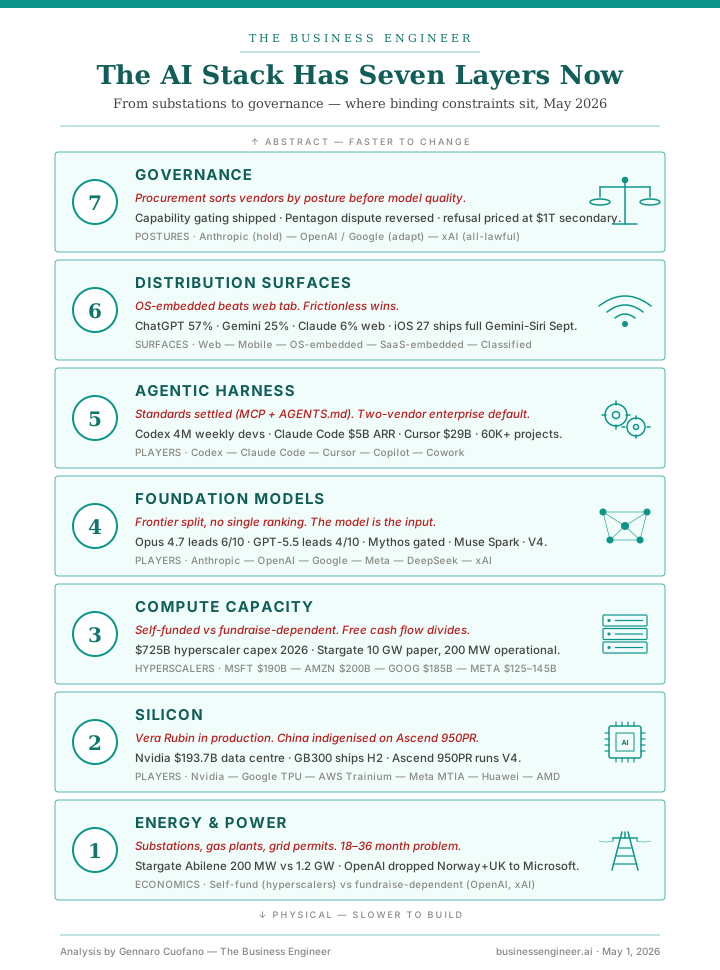
"Microsoft's advantage is integration, not leadership at any single layer ."
The Key Question
Can Microsoft defend against specialized competitors at each layer? Google TPUs dominate silicon. OpenAI leads frontier models. Emerging frameworks fragment platform control.
The Takeaway
Microsoft wins on distribution and integration —not on any single layer of the AI stack .
Can Microsoft defend against specialized competitors at each layer? Google TPUs dominate silicon. OpenAI leads frontier models. Emerging frameworks fragment platform control.
"Microsoft's advantage is integration, not leadership at any single layer ."
What is the moat?
"Microsoft's advantage is integration, not leadership at any single layer ."
What is the key question?
Can Microsoft defend against specialized competitors at each layer? Google TPUs dominate silicon. OpenAI leads frontier models. Emerging frameworks fragment platform control.
Gennaro Cuofano is a CRO and tech executive who has worked in AI since late 2015, starting with bringing NLP, natural-language generation, voice and chatbot products to the marketing industry. His background is in law and finance: he holds a Master's degree in Law and an International MBA with an emphasis on corporate finance (LUISS Business School and the University of San Diego, 2012), and worked as a financial analyst at a real-estate investment firm in San Diego and as an assistant controller. His work focuses on business model strategy, business engineering and, more broadly, structural analysis: how companies make money, read from their own filings. He created FourWeekMBA and leads research there and at The Business Engineer, his newsletter on AI and business strategy, with over 95,000 subscribers and more than 1,000 published analyses. His writing has also appeared on Entrepreneur (for example, How to Digitize a Family Business in Europe) and HackerNoon. Find him on LinkedIn and Substack. See how we source.
Scroll to Top
Discover more from FourWeekMBA
Subscribe now to keep reading and get access to the full archive.