Anthropic vs OpenAI: Two Theories of How to Build the AI Agent Stack
After the OpenClaw acqui-hire, two companies now claim coverage across all four layers of the agentic economy. They got there in fundamentally different ways — and the difference will determine which approach wins.
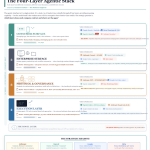
Before February 15, 2026, only one company had a presence across all four layers of the emerging agent stack: Anthropic. The OpenClaw deal changed that. OpenAI now claims the same coverage. But the two companies represent opposing philosophies of how to build a technology stack — and the AI industry is about to find out which one holds.
Anthropic: Integration Coherence
Anthropic built every layer of its stack internally. No major acquisitions. No adopted standards from competitors. Every piece was designed to feed the others.
Consumer Surface: Claude.ai across web and mobile, Claude in Chrome, Claude in Excel. Functional and growing, but Anthropic does not own a messaging platform. No WhatsApp equivalent. No daily-habit consumer surface embedded in how people communicate. This is the gap the OpenClaw move now weaponizes against Anthropic.
Enterprise Surface: Cowork launched in January 2026 as a desktop agent running a full Linux VM locally. Its announcement triggered a $285 billion software stock selloff. No competitor matches its general-purpose desktop agent capability. This is Anthropic’s strongest product layer.
Protocol and Governance: Anthropic created and stewards MCP — the Model Context Protocol — which has reached 97 million monthly SDK downloads and over 10,000 active servers. It has been adopted by OpenAI, Google, and Microsoft. Donated to the Linux Foundation, but Anthropic remains the de facto standard-setter. This is Anthropic’s strongest long-term moat. Controlling the protocol that connects agents to tools creates structural leverage that outlasts any model advantage.
Execution: Claude Code became a billion-dollar product within six months of launch. The Skills specification has been adopted beyond Anthropic’s ecosystem — Microsoft integrated Skills support into VS Code and GitHub Copilot, and OpenAI adopted the format for Codex CLI.
The logic:Apple-style vertical integration. Every layer reinforces the others. The trade-off: slower expansion because everything must be built rather than acquired.
OpenAI: Ecosystem Assembly
OpenAI reached all four layers through a combination of internal development, open-source projects, adopted standards, and acqui-hires.
Consumer Surface: OpenClaw — the most important addition. A messaging-native personal agent that works where consumers already are. 198,000 GitHub stars, viral adoption globally, model-agnostic architecture. The Chromium model: open-source foundation with OpenAI building the premium product on top.
Enterprise Surface: Codex functions as a sophisticated coding command center with Skills, Automations, and parallel agents. But it is not a general-purpose desktop agent like Anthropic’s Cowork. There is no equivalent of giving the agent access to a folder and describing a desired outcome across any application.
Protocol and Governance:OpenAI adopted MCP rather than building a competing standard. A pragmatic choice — but it means OpenAI does not control the governance layer. It has robust developer infrastructure through the Agents SDK, AgentKit, Responses API, and Connectors, but the foundational protocol belongs to a competitor.
Execution: Codex is the most technically advanced agentic coding system shipped, operating across five surfaces: web app, CLI, IDE extension, macOS desktop app, and cloud. GPT-5.3-Codex achieved state-of-the-art results on major benchmarks. The CLI is open-source.
The logic: Speed through assembly. Open-source builds community and adoption, then OpenAI captures the value layer. The trade-off: integration coherence across components that were not designed to work together.
The Core Tension
Anthropic’s risk is the consumer surface gap. It does not own a messaging platform, and the OpenClaw deal means OpenAI now has a credible consumer agent while Anthropic does not. If the messaging-first thesis is correct — that the agent interface is messaging, not standalone apps — Anthropic’s strongest products (Cowork, Claude Code) may not matter at the consumer layer.
OpenAI’s risk is integration. Assembling a stack from open-source components, adopted standards, and acqui-hires is fundamentally different from building one. OpenClaw was designed as a solo developer project. Codex was built as a coding tool. MCP was created by a competitor. Making these pieces work together as a coherent system is a different challenge than adding them to a slide deck.
The Protocol Advantage
There is an asymmetry that favors Anthropic in the long run. OpenClaw is model-agnostic — it works with GPT, Claude, DeepSeek, and any model the user configures. This model flexibility paradoxically reinforces MCP’s importance. As agents become more model-flexible, the protocol that connects them to tools becomes more critical, not less.
Anthropic controls that protocol. Every agent that adopts MCP — including agents built on OpenAI’s models — strengthens Anthropic’s structural position. This is the kind of moat that compounds over time.
What Decides the Winner
The next twelve months will test both theories. If integration coherence matters more than speed of assembly, Anthropic’s approach wins. If speed to market and surface control matter more than architectural elegance, OpenAI’s approach wins.
The AI industry is watching the most important architectural bet since iOS versus Android: one company that builds everything internally versus one that assembles from the ecosystem. Both now claim the same coverage. Only one theory will prove correct at scale.
Gennaro is the creator of FourWeekMBA, which reached about four million business people, comprising C-level executives, investors, analysts, product managers, and aspiring digital entrepreneurs in 2022 alone | He is also Director of Sales for a high-tech scaleup in the AI Industry | In 2012, Gennaro earned an International MBA with emphasis on Corporate Finance and Business Strategy.