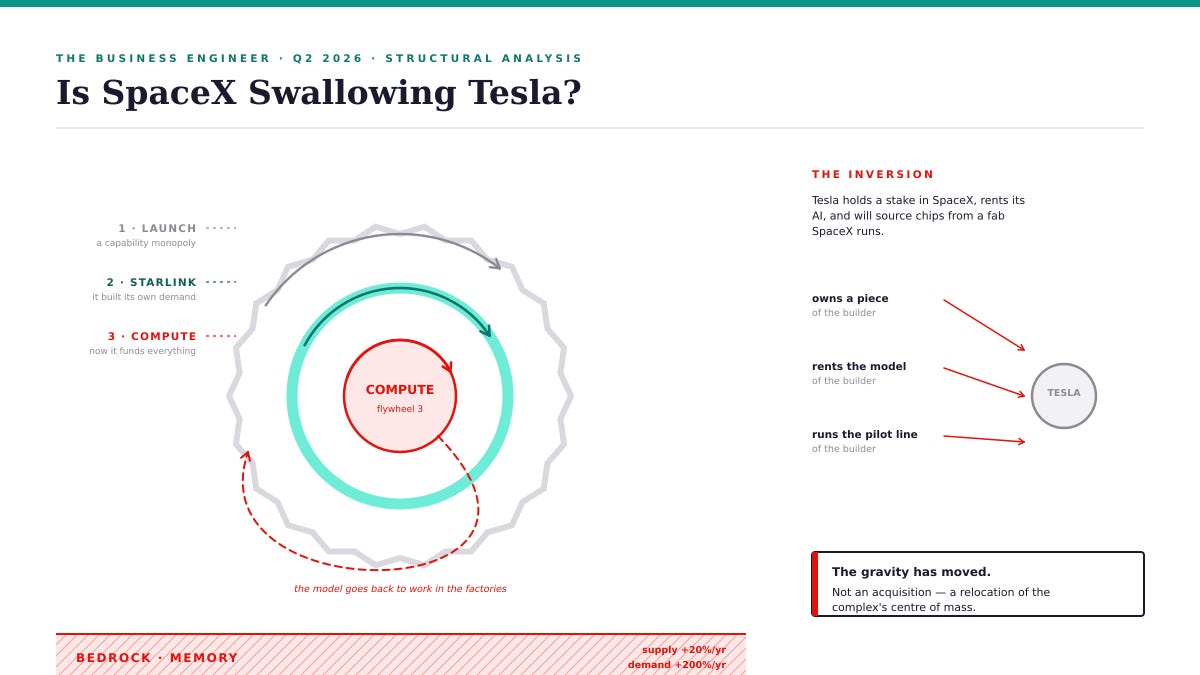
The Great Ownership Divide: Why Apple and Tesla’s Shareholder Structures Point to Different Futures
While millions search “who owns Apple — as explored in the interface layer wars reshaping consumer tech — ” as the tech giant’s market cap flirts with $4 trillion, a fascinating business model story emerges when comparing Apple’s ownership structure to Tesla’s radically different approach. These two trillion-dollar companies represent opposing philosophies on how ownership concentration affects innovation velocity and market dominance.
Apple operates under what business model experts call “distributed institutional ownership.” No single entity owns more than 8% of the company, with Vanguard, BlackRock, and State Street holding the largest positions. This creates a fascinating dynamic: maximum financial stability with minimum ownership interference in product decisions.
Tesla, conversely, operates under “founder-concentrated ownership,” with Elon Musk controlling approximately 13% of shares plus significant influence through his leadership role. This concentration enables rapid pivots—from cars to energy to AI—but creates volatility that Apple’s model explicitly avoids.
The Innovation Speed vs Stability Trade-off
Apple’s distributed ownership model enables what CEO Tim Cook calls “long-term thinking without quarterly pressure.” When thousands of institutional investors hold small positions, no single voice can demand dramatic strategic shifts. This explains Apple’s methodical approach: perfect the iPhone ecosystem, then gradually expand into services, wearables, and eventually spatial computing.
Tesla’s concentrated model allows for what Musk terms “rapid iteration cycles.” When ownership is concentrated, strategic pivots happen faster. Tesla moved from luxury cars to mass market to autonomous driving to robotics—shifts that would require extensive institutional buy-in under Apple’s model.
The AI Disruption Factor
As artificial intelligence reshapes business models, these ownership structures create different competitive advantages. Apple’s distributed ownership provides patient capital for massive AI infrastructure — as explored in the economics of AI compute infrastructure — investments—the company spent $22 billion on R&D in 2023 without shareholder revolts.
Tesla’s concentrated ownership enables aggressive AI bets that might seem risky to institutional investors. The company’s pivot toward full self-driving and robotaxis represents exactly the kind of bold repositioning that distributed ownership models struggle to execute quickly.
Which Model Wins the Next Decade?
The answer depends on market conditions. Apple’s ownership structure thrives during stability—perfect for incrementally improving profitable ecosystems. The iPhone generates $200 billion annually because distributed ownership allows relentless focus on refinement over disruption.
Tesla’s model excels during technological disruption. When entire industries shift rapidly—electric vehicles, autonomous driving, energy storage—concentrated ownership enables faster strategic responses than committee-based institutional decision-making.
For business model strategists, the lesson is clear: ownership structure isn’t just about control—it’s about innovation velocity. As AI accelerates market disruption, companies must choose between Apple’s stable-growth model and Tesla’s high-risk, high-reward approach.
The next trillion-dollar companies will likely emerge from whichever ownership philosophy best matches the pace of technological change in their specific markets.
Gennaro Cuofano is a CRO and tech executive who has worked in AI since late 2015, starting with bringing NLP, natural-language generation, voice and chatbot products to the marketing industry. His background is in law and finance: he holds a Master's degree in Law and an International MBA with an emphasis on corporate finance (LUISS Business School and the University of San Diego, 2012), and worked as a financial analyst at a real-estate investment firm in San Diego and as an assistant controller. His work focuses on business model strategy, business engineering and, more broadly, structural analysis: how companies make money, read from their own filings. He created FourWeekMBA and leads research there and at The Business Engineer, his newsletter on AI and business strategy, with over 95,000 subscribers and more than 1,000 published analyses. His writing has also appeared on Entrepreneur (for example, How to Digitize a Family Business in Europe) and HackerNoon. Find him on LinkedIn and Substack. See how we source.
Scroll to Top
Discover more from FourWeekMBA
Subscribe now to keep reading and get access to the full archive.