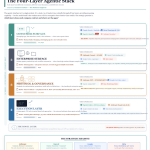
Every analyst covering AR glasses is asking the wrong question. They are asking whether consumers will buy the product, whether the battery lasts, and whether the frames look good enough to wear to dinner. These are reasonable questions about a consumer device. The consumer device is the wrong unit of analysis.
The right question is architectural. What is the interface layer through which a human directs persistent AI agents that control compute — as explored in the economics of AI compute infrastructure — rs the human never touches? Messaging proved it was viable. OpenClaw proved it was scalable — one developer, one persistent daemon, a human directing their entire digital operation through WhatsApp while walking down the street, without touching a keyboard.
The interface does not need to be a screen. It needs to be whatever surface the human is already using.AR glasses are the next surface: not because they display information better than a phone, but because they embed the interface into the physical world, making the environment itself the UI and eliminating the context switch every phone interaction requires.
Hold that reframe. Everything that follows depends on it.
FREE NEWSLETTER
Get AI Strategy Intelligence Daily
Join 90,000+ strategists. Business modelanalysis, AI maps, and earnings deep dives — free.
Gennaro is the creator of FourWeekMBA, which reached about four million business people, comprising C-level executives, investors, analysts, product managers, and aspiring digital entrepreneurs in 2022 alone | He is also Director of Sales for a high-tech scaleup in the AI Industry | In 2012, Gennaro earned an International MBA with emphasis on Corporate Finance and Business Strategy.
Scroll to Top
Discover more from FourWeekMBA
Subscribe now to keep reading and get access to the full archive.